If you have ever made a vision board yourself, you already know how powerful they can be. But here’s the best part: kids can benefit from them too. Vision boards help students picture their goals, stay motivated, and reflect on what matters most to them.
In this post, you’ll find inspiring vision board examples for kids, tips for classroom use, and ready-to-use Vision Board Templates that make the activity easy to run with your students with minimal prep.
Why Vision Boards Work for Kids
Vision boards give students a chance to slow down and think about their hopes and goals, both in and out of school. They are also a great way to:
- Encourage reflection and self-awareness
- Support growth mindset thinking
- Make goal-setting fun and creative
- Build classroom community when shared
Whether you use them after winter break, at the start of the year, or during goal-setting lessons, students love seeing their dreams represented visually.

Vision Board Examples for Kids
Here are a few ways you can set up vision boards in your classroom. Mix and match ideas depending on the age group, available time, and materials.
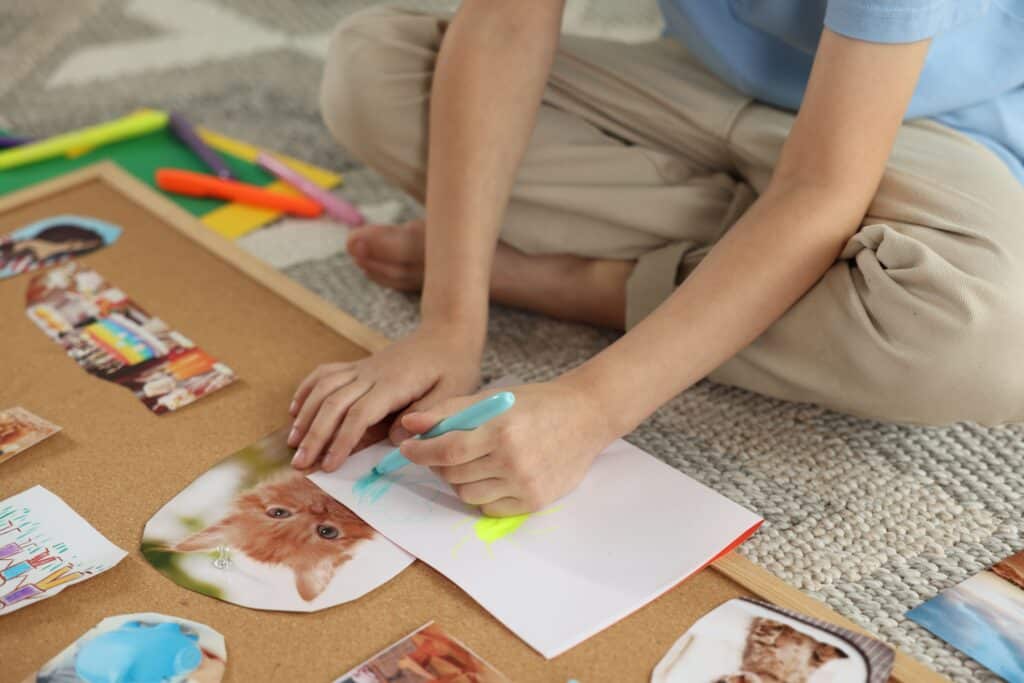
1. Classic Collage Vision Board
Students use magazines, printed images, or drawings to represent their dreams. Add glue, scissors, and colorful markers, and let creativity take over.
Why it works: It is hands-on, easy to individualize, and perfect for visual learners.
Teacher tip: Include prompts like “What do I want to learn this year?” or “What kind of person do I want to be?”
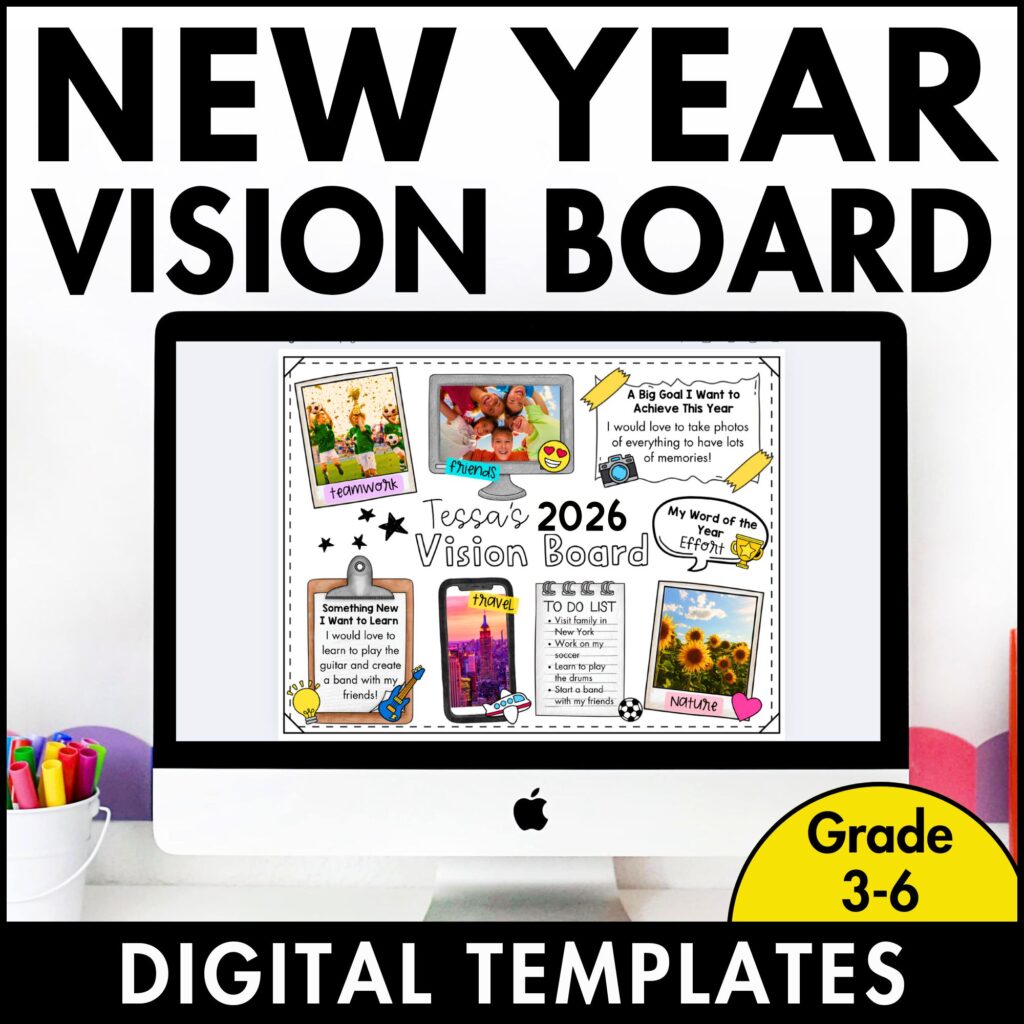
2. Digital Vision Board
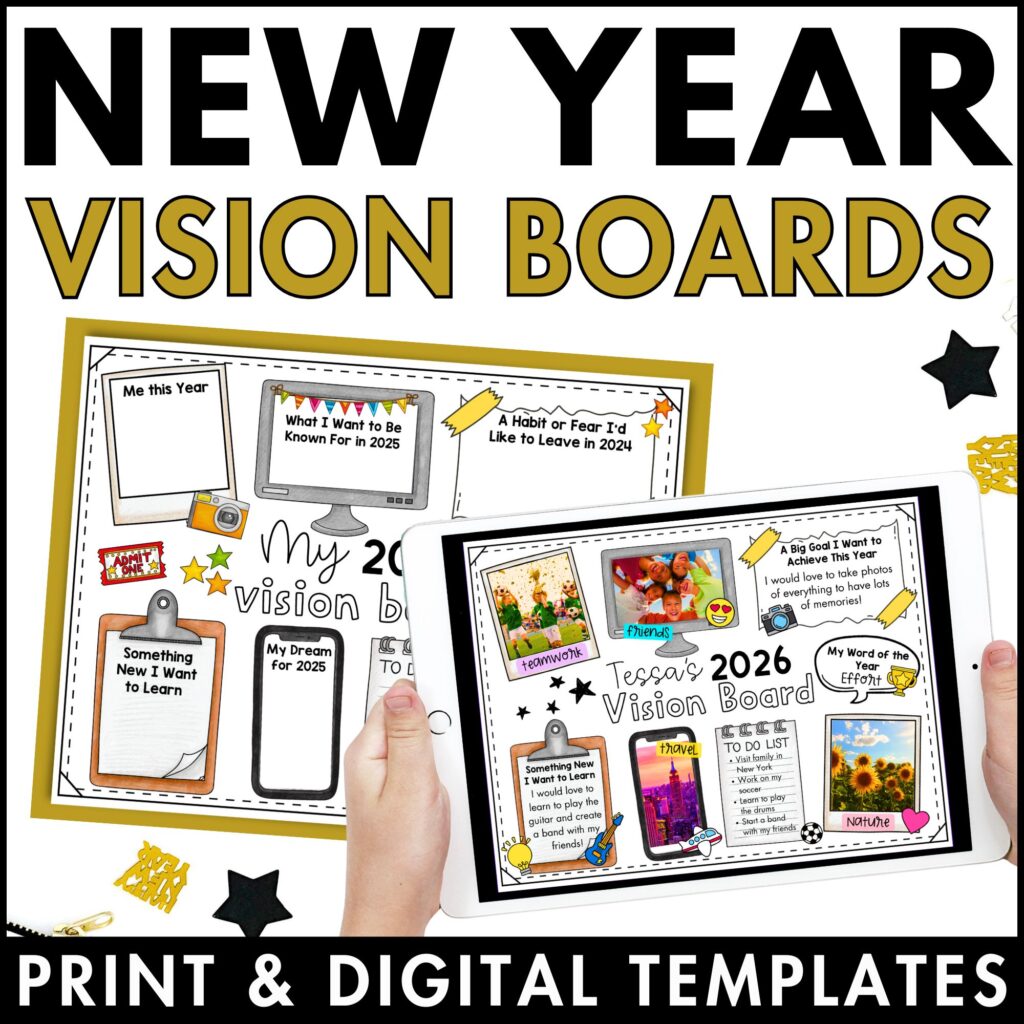
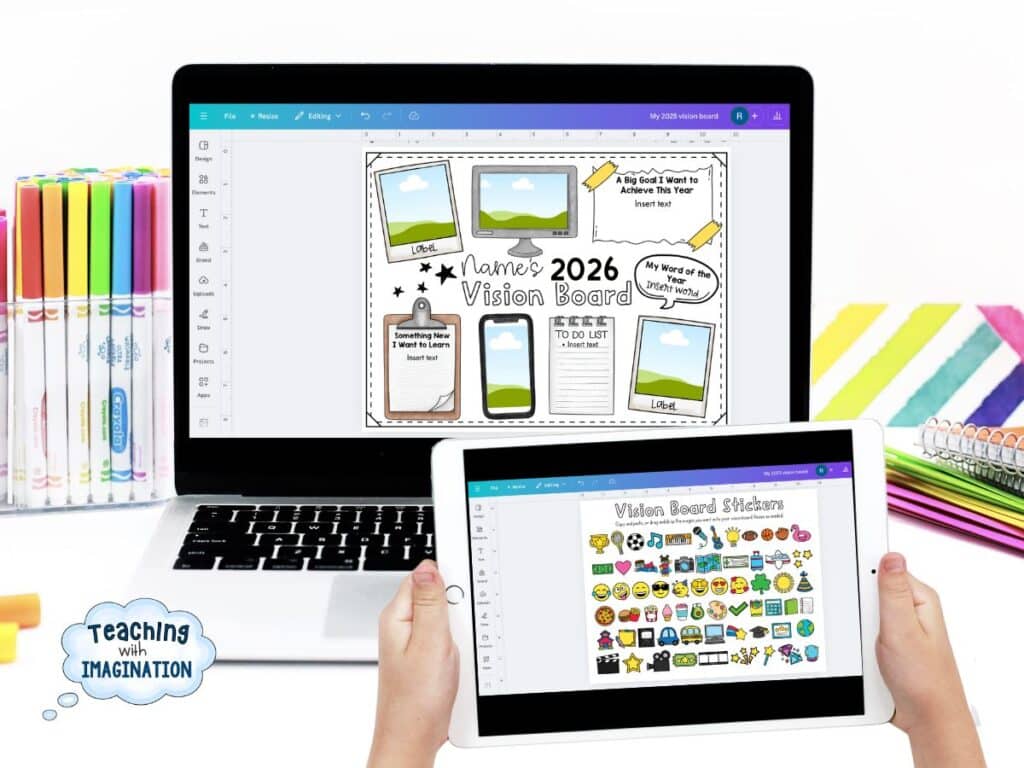
If your students have access to devices, let them create digital boards using Google Slides or Canva. They can drag in images, add text boxes, and design layouts that reflect their personalities.
Why it works: It is tech-friendly, editable, and easy to display on classroom screens or print out and display.
Try the 2026 Vision Board Project Digital Templates here.

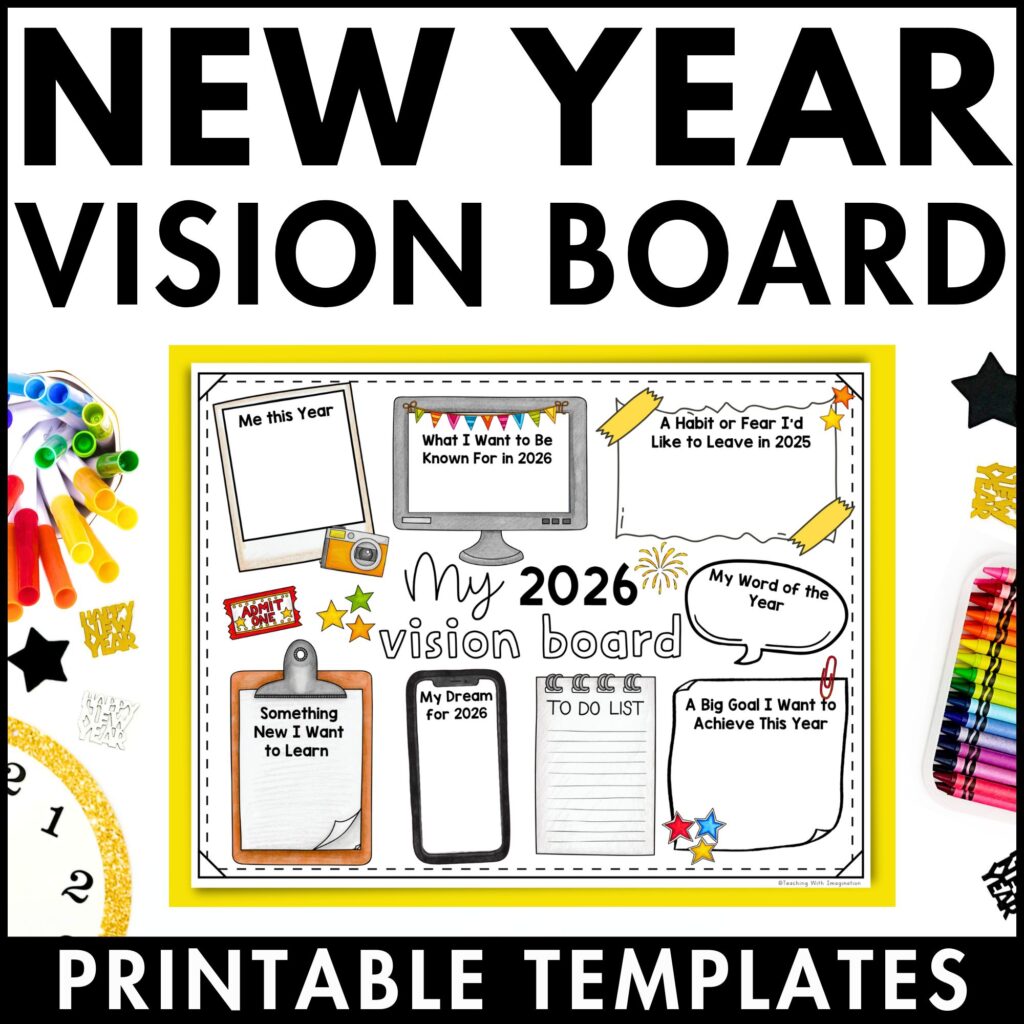
3. Easy Print-out Vision Board
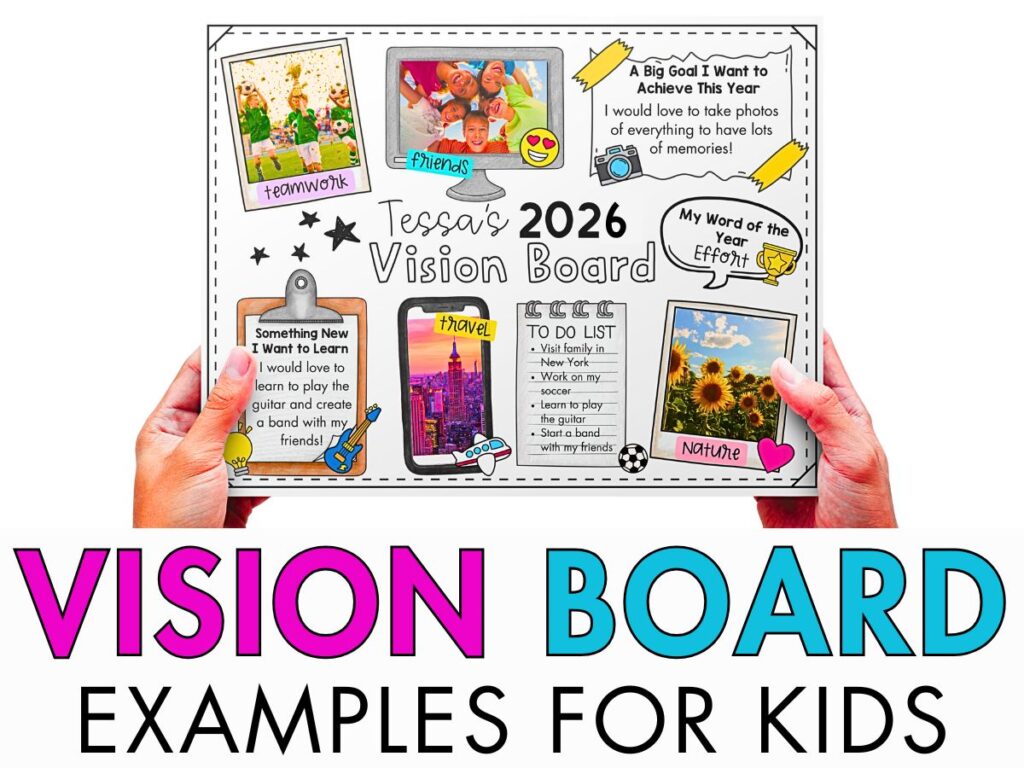
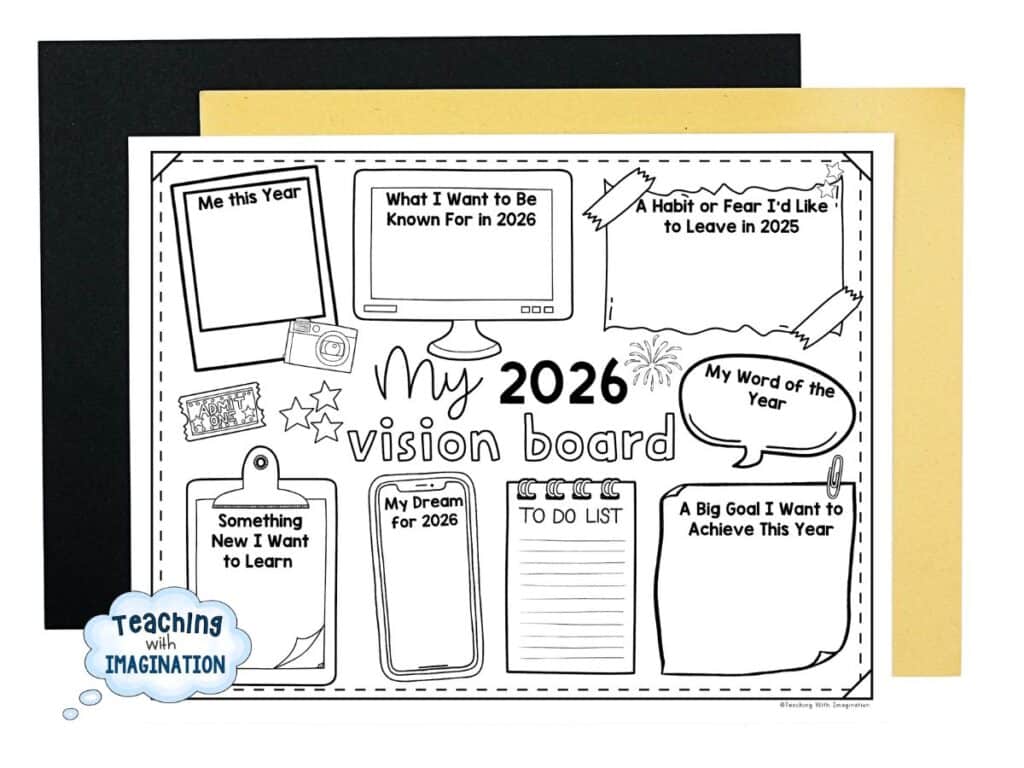
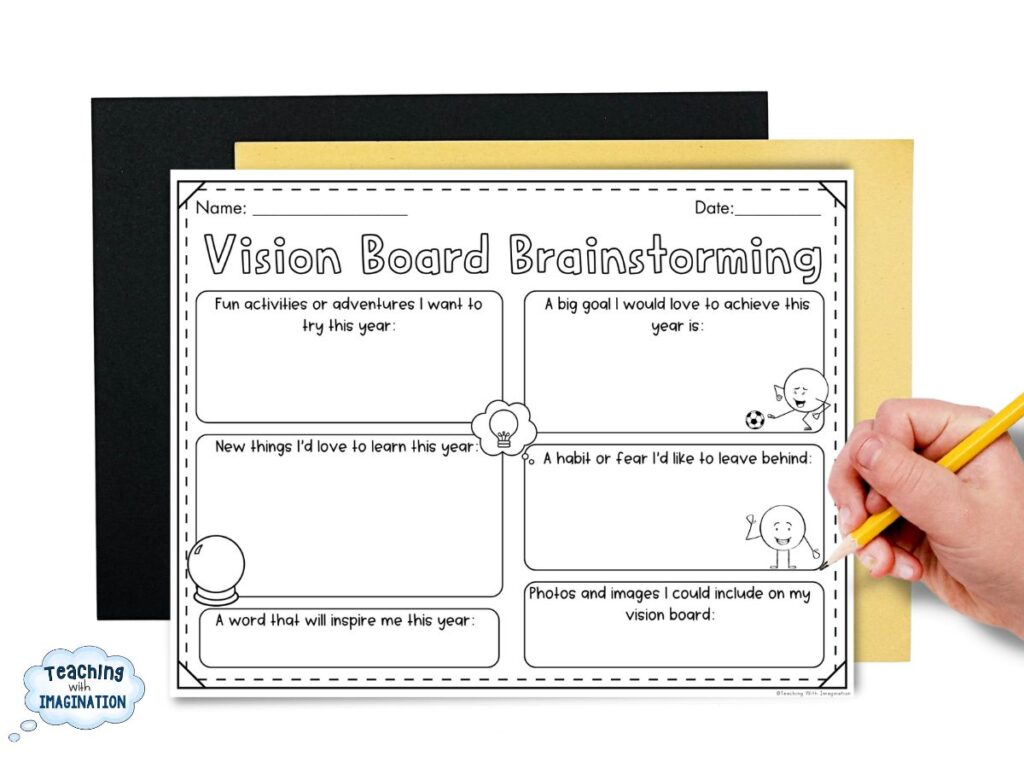
One of my favorite go-to options when you don’t have computer access is this Easy Print-Out Vision Board. It’s quick to prep, fun for students to complete, and still encourages meaningful reflection. With ready-made prompts like “My Word of the Year” and “Something New I Want to Learn,” students can set their intentions and goals in a creative way. Just print, pass out, and let them design their own vision for 2026 with no devices needed. Plus it includes a planning sheet to make it a really well-thought-our reflective activity for your class.
Why it works: It is simple, achievable, and absolutely zero prep for the teacher.
Get the Vision Board Printable Template Set here.
4. Class Vision Board
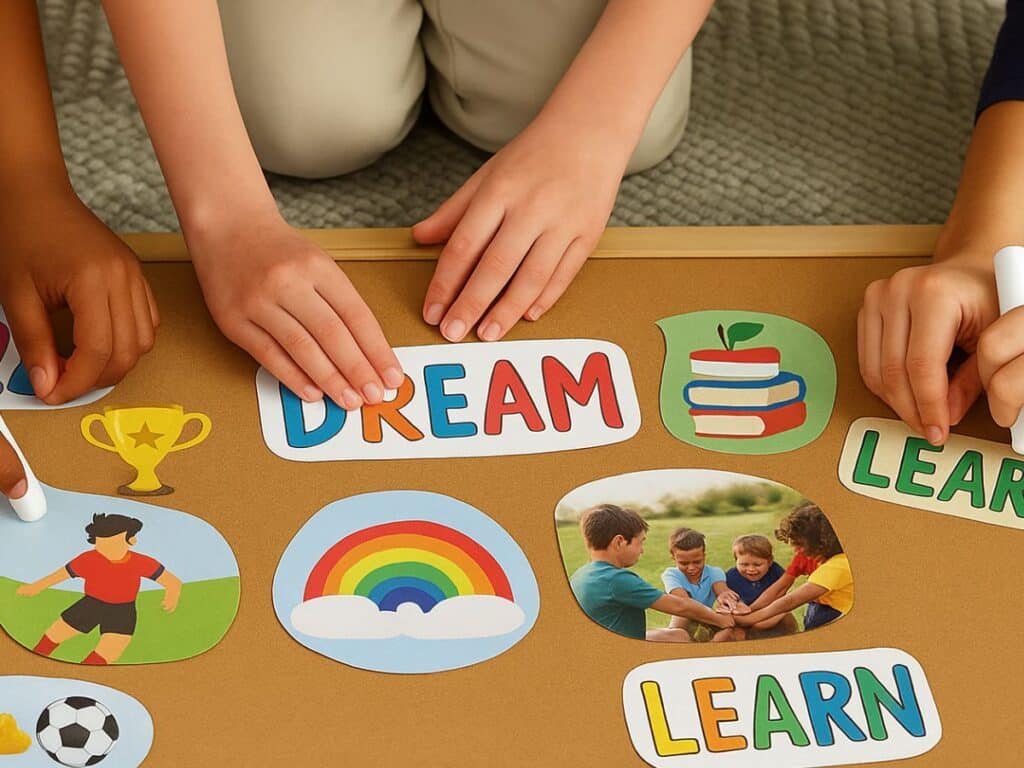
Turn the activity into a group project. Have students contribute one picture or word that represents something they want the class to achieve together, such as kindness, curiosity, or teamwork.
Why it works: It builds unity and sets a positive tone for the year ahead.
Display the finished board on a classroom wall and revisit it throughout the term to celebrate class goals.
Make It Easy with Ready-to-Use Templates
If you would like to skip the prep, my ready-made template bundle that includes:
- Brainstorm pages
- Cut-out stickers to decorate the vision board
- Printable and digital board options
- Pre-written prompts for a no-prep activity

Final Thoughts
Vision boards are more than just a creative craft. They help kids imagine their goals, build confidence, and take ownership of their learning journey.
Try one of these vision board examples for kids in your classroom this term and watch your students’ motivation and self-belief grow.